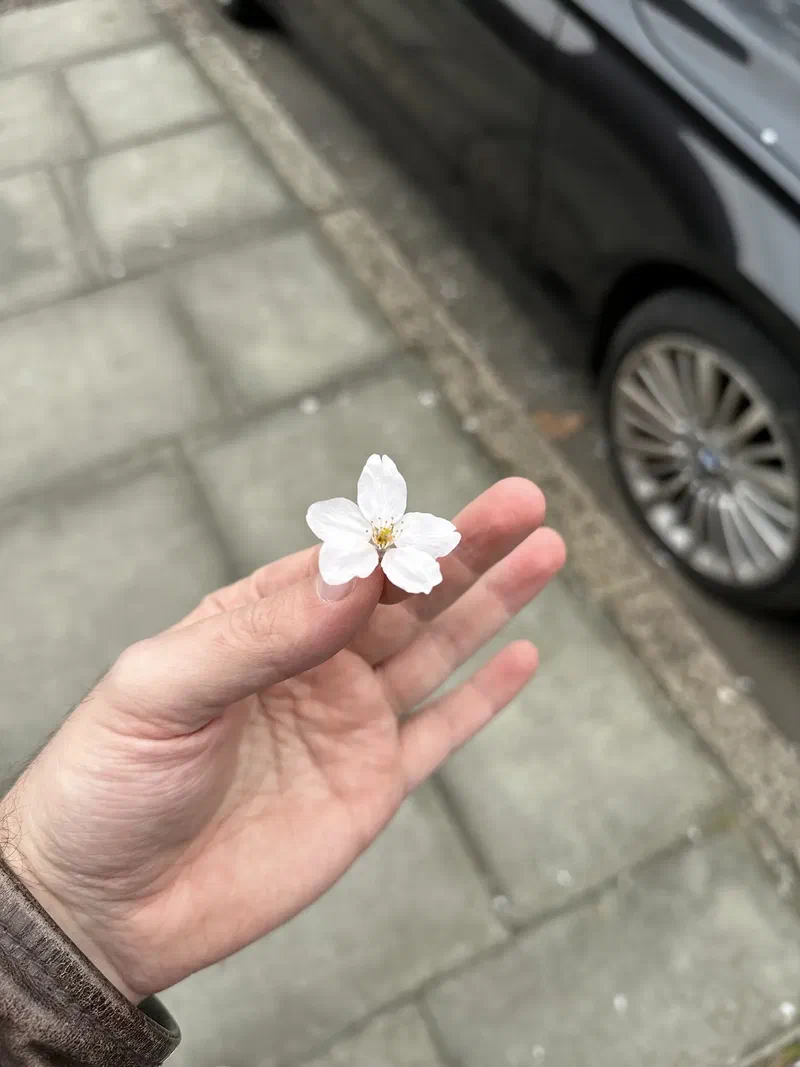
There’s a British phrase called “to nip it in the bud”.
It means to stop something at an early stage before it becomes a bigger problem. It originally comes from gardening: “nipping” a flower bud means to cut it off before it can open and grow. It prevents the plant from growing further.
That’s what we do to ourselves, when we don’t do something because it might not be “good enough”.
We prevent our idea from growing further. We deny ourselves the space to grow further. In other words: it’s self-censorship.
There’s one powerful phrase that helps me fight this: “to know if you need to delete it, first you have to write it down”.
If You Try, You Might Fail
Many times, I’ve had an idea, started thinking about it, manipulated it in my head, but then killed it.
Booh, bad idea! Quick, I must hide it! It’s not good enough! Excuse me, everyone, don’t pay attention to it, don’t hold me accountable, don’t judge me. I promise I can do better!
If I try, I might fail. I might not do a good job. I might be disappointed. I might discover I’m a fraud. People might make fun of me.
Not trying is safe. I might be unhappy because I don’t make the art, but at least I know what that feels like. Surely, whatever catastrophe follows an imperfect idea must be worse. Right?
It’s as if I had knots1 in my brain stopping me from moving forward:
- Not good enough
- Not enough time to finish
- Not original
- Not me
- Not what it was like in my head
Ideas are like plants
Is anybody’s first draft always good to go? Like a masterpiece with nothing to change?
To figure out if it’s any good, first you have to write it down. You have to make it exist. If you keep it in your head, how do you hope to refine it? Imagine you want to sculpt your garden with bushes. First you have to let the bushes grow, so you can prune them later.
The problem with not giving space to an idea is that it might never show up again. Not giving it space means it won’t grow, and might starve and die.
Ideas are like plants. You need to water them. But over time. You don’t have to water them in one go. You just have to water them a little, regularly. Water them too intensely all at once and they might die too. For me, that might look like obsessing over one song for months, overthinking one paragraph in this blog post, or even burning out.
At the end of the day, we don’t create ideas. We have them. They go through us. Imagine random seeds flew into your garden - you’ve got no idea what’s in them. Your job is to be a good gardener, a good host. Allow them to grow. Give them a chance. Use your hands.
Build The Dreamhouse
So we have seeds, and we’ve agreed to give them space in our garden. Now, we’re going to need water.
Water is play.
When you were little and were playing with Lego, you weren’t letting any thoughts of self-doubt and premature judgement stop you. You built the castle. You built the dreamhouse. You told the story. And most times, no one was around. You played. And you enjoyed it. Just for what it was: play.
Because at the end of the day, it’s not about how much you “produce” out of the process, it’s about how much you put in. If there’s no input, there’s no output. It’s as simple as that. Just play. Put yourself into it.
If you nip it in the bud, you stop your creative process before it starts. You tell the kid in you: You can’t build that Lego castle because it won’t look good enough, or because it looks too much like the one on the box.
Your poor inner child can’t come out and play. You might as well have slapped her in the face. Told her off. Do you think she’s going to want to play after that? Or is she going to be scared and stay hidden?
Let that plant grow. Water it every now and then. No need to overdo it. A little bit, regularly, that’s already plenty.
If you can’t engage with the idea right now, make a note somewhere, write about it. If it’s resistance talking - one of those knots - then give it five minutes. Give it ten minutes. Just play with it. Just play.
My Tool Shed
“I’m not a great programmer; I’m just a good programmer with great habits.”
- Kent Beck
I am now fully committed to this plant analogy. So we’ve got seeds, we’ve got water, now we’re going to need some gardening tools to help with our adventure.
What does this look like for me?
- Keep a seed bank: Noting down scrappy ideas. Usually on paper first, then in a system2 organised in categories, like blog post ideas, quotes and inspiration, books to read, presents ideas, etc. (I use Google Keep).
- Trust the timer: Using a timer to allow myself to spend a block of time on a specific task, like freeform writing, or building a synth preset from scratch. I usually do 30 minutes sessions.
- Have paper around: Having paper around when I am working, creating or “being bored” so I can capture ideas. It’s been great for catching fleeting ideas without picking up my phone (which will 100% distract me).
- Separate growing from pruning: I try keeping design, play and writing separate as they require a different type of energy - but I sometimes shift between them when it makes sense, for example when I am super inspired. I find it really hard designing a synth sound while also writing a melody - but if I make a sound I really like, it might push me into play/writing mode.
- The 5-minute rule: Just starting, ignoring the voice in my head saying “I don’t think it’s going to work!”. It helps me break through my negative self-talk every single time.
- Reduce friction: I find starting much easier if my gear is ready to use, ready to play, ready to go. Having to look for tools tends to kill my creativity.
With these habits, I censor myself way less. Because I don’t stop myself from starting, I spend more time doing and crafting and playing. And the more I play, the higher the chances that it grows into something I can harvest and use.
Conclusion
Usually, when we say we’re going to “nip it in the bud”, it’s supposed to be a good thing - we’re trying to avoid a problem. The issue is that we do the same to creative ideas. Your inner critic thinks it’s protecting you by using premature judgement and stopping you - protecting you from the “not-something-enough” catastrophe scenarios.
If you don’t try, you can’t fail. If you don’t fail, you can’t get hurt. And so, you cancel play time.
But if you give space to your ideas, they will grow. If you encourage your inner artist, they will surprise you, and you’ll end up with a greenhouse filled with thriving experiments, full of ideas and stories to pick from.
All it takes is agreeing to let your inner artist get out. All it takes is a few habits.
Next time you’re tempted to nip it in the bud, think twice. What would happen if you let it grow for a bit?
-
It’s funny because they all start with not! ↩︎
-
I recommend reading the book Getting Things Done by David Allen. It really helped me find simple tools that help me feel less stressed which I can apply every day, for anything. Your system can be analog (files, notebook) or digital: whatever works for you. ↩︎